
Top 7 Powerful Benefits of HYDRAFACIAL TREATMENT IN THRISSUR
HYDRAFACIAL TREATMENT IN THRISSUR is a non-invasive facial treatment designed to cleanse, exfoliate, extract impurities, and hydrate the skin through a structured series of steps. It has become a popular choice for people looking for professional skincare with minimal downtime.
Unlike a conventional facial that mainly involves cleansing, massage, masks, and moisturization, HydraFacial uses specialized technology to remove surface debris and deliver hydrating solutions to the skin. It may be considered for concerns such as dryness, dull-looking skin, uneven texture, clogged pores, excess oil, and the appearance of fine lines.
The treatment can usually be customized according to skin type and individual concerns. Understanding the procedure, benefits, suitability, aftercare, and limitations can help you make an informed decision.
What Is HYDRAFACIAL TREATMENT
A HydraFacial is a multi-step facial treatment performed using a specialized handheld device. It combines cleansing, exfoliation, gentle extraction, and hydration in a single session.
The procedure focuses on removing accumulated impurities and dead surface skin cells while improving hydration. Since the treatment can be adjusted according to individual needs, it may be suitable for different skin types after proper assessment.
A typical HydraFacial may include:
- Deep cleansing
- Gentle exfoliation
- Removal of dead surface cells
- Loosening of pore debris
- Suction-based extraction
- Hydrating solutions
- Application of selected serums
- Moisturization and sun protection
The exact steps can vary depending on skin condition and treatment goals.
How Does HydraFacial Treatment Work
HydraFacial follows several stages rather than relying on a single skincare technique. Each stage has a specific role in improving the appearance and feel of the skin.
Cleansing
The procedure usually begins with cleansing. Makeup, sunscreen, excess oil, dirt, and environmental debris are removed from the surface.
Starting with clean skin helps prepare it for the remaining treatment stages.
Exfoliation
Gentle exfoliation removes accumulated dead skin cells. Excessive buildup of these cells can make the skin appear rough, dull, or uneven.
Removing this surface layer may leave the skin feeling smoother and prepare it for extraction and hydration.
Gentle Peel
Depending on the skin type and selected protocol, a mild exfoliating solution may be used.
This helps loosen surface debris and impurities without necessarily producing the peeling associated with stronger chemical peels.
Extraction
A specialized device provides controlled suction to help remove oil, blackheads, and debris from congested pores.
This differs from traditional manual extraction, which may involve squeezing or pressure.
Hydration
Hydrating solutions are then delivered to the skin. This is one of the most important stages of a HydraFacial.
The ingredients used can vary according to the person’s skin type and treatment goals.
Protection
The procedure may finish with suitable moisturizer and sunscreen to help maintain hydration and protect the freshly treated skin.
Skin Concerns That May Benefit From HydraFacial
Skin is continuously exposed to sunlight, pollution, sweat, cosmetics, and environmental contaminants. Natural oil production and dead skin cells can also contribute to congestion and dullness.
People may consider HydraFacial for concerns such as:
- Dull-looking skin
- Dry or dehydrated skin
- Rough texture
- Congested pores
- Blackheads
- Excess surface oil
- Uneven-looking skin tone
- Visible pores
- Fine lines
- Tired-looking skin
- General loss of skin freshness
HydraFacial is primarily a cosmetic skincare procedure. Persistent acne, unusual pigmentation, rashes, infections, or other significant skin concerns may require appropriate medical evaluation.
Types of HydraFacial Treatment
HydraFacial protocols can be adjusted according to different skin concerns.
Standard HydraFacial
A standard session generally focuses on cleansing, exfoliation, extraction, and hydration.
It may be considered by people seeking routine professional skincare and general improvement in skin texture and freshness.
Hydration-Focused HydraFacial
This approach focuses more strongly on restoring moisture to dry or dehydrated-looking skin.
Hydrating solutions may help the skin feel softer, smoother, and more comfortable.
Clarifying HydraFacial
A clarifying treatment may be considered for oily or congested skin.
Greater attention is generally given to cleansing and extraction to address excess oil, blackheads, and pore congestion.
Age-Supportive HydraFacial
Some protocols focus on concerns such as fine lines, roughness, and other visible changes associated with skin ageing.
Products and treatment steps are selected according to individual skin requirements.
Customized HydraFacial
Not everyone needs the same facial. Treatment steps, intensity, and skincare solutions can be adjusted according to sensitivity, hydration levels, skin type, and specific concerns.
Top 7 Benefits of HYDRAFACIAL TREATMENT IN THRISSUR
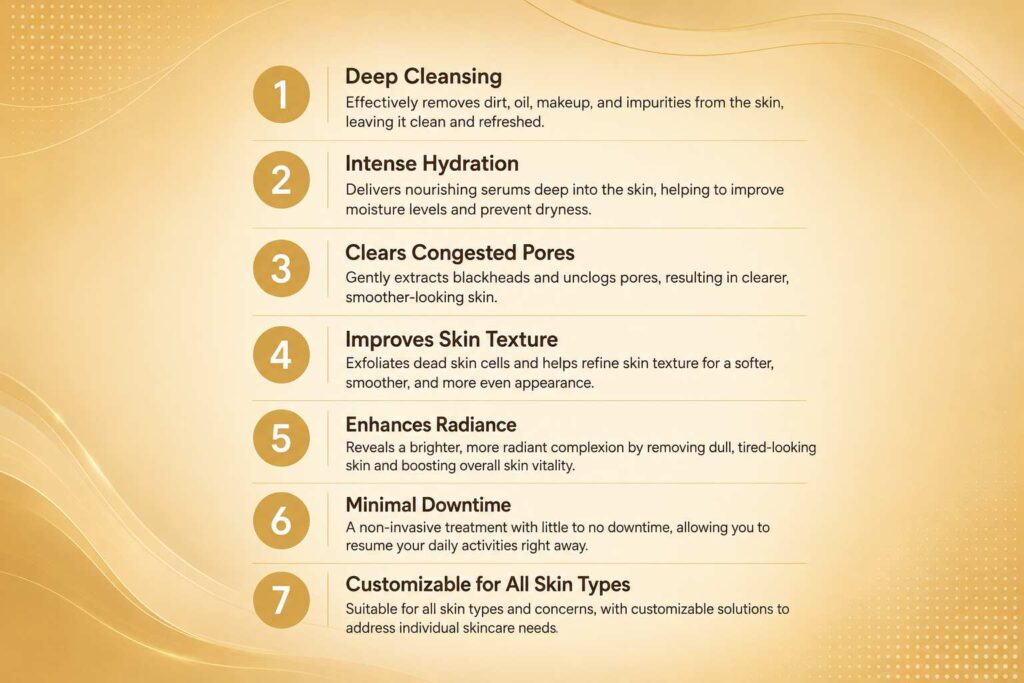
The ability to combine several skincare techniques into one procedure is one of the main reasons people consider HydraFacial.
1. Deep Cleansing
Daily cleansing removes surface impurities, but oil, dead cells, makeup residue, and environmental debris may still accumulate.
Professional cleansing and exfoliation can help remove this buildup and provide a cleaner skin surface.
2. Improved Skin Hydration
Hydration is a major component of HydraFacial.
Dehydrated skin can feel tight and appear rough or dull. Delivering hydrating solutions after cleansing and exfoliation may help create a softer and more refreshed appearance.
3. Helps Clear Congested Pores
Dead skin cells, oil, and other debris can accumulate inside pores.
The extraction stage uses controlled suction to help remove this buildup and may improve the appearance of congested pores and blackheads.
4. Supports Smoother Skin Texture
Removing accumulated surface cells can make the skin feel smoother.
People concerned about rough or uneven-looking texture may notice a more polished appearance following treatment.
5. Helps Refresh Dull-Looking Skin
Cleansing, exfoliation, and hydration can help improve the overall appearance of dull skin.
Some people notice that their skin looks fresher and more hydrated shortly after treatment.
6. Minimal Downtime
HydraFacial is a non-surgical procedure and generally does not require the prolonged recovery associated with more intensive cosmetic treatments.
Temporary redness or sensitivity can occur, but many people can return to their normal routine relatively quickly.
7. Customizable Treatment
Skin type and concerns vary from person to person.
The intensity of treatment, serums, and individual stages can therefore be adjusted according to sensitivity, hydration, oil production, and cosmetic goals.
Who May Consider HydraFacial
HydraFacial may be considered by adults looking to address mild cosmetic skin concerns.
Potential reasons for considering treatment include:
- Dehydrated-looking skin
- Dullness
- Mild congestion
- Blackheads
- Uneven texture
- Excess oil
- Visible pores
- Early fine lines
- Rough skin texture
Suitability should be assessed individually. Current skincare products, medications, allergies, sensitivity, active skin problems, and recent cosmetic procedures can influence whether the treatment is appropriate.
What Happens During a HydraFacial Session
A session generally starts with an assessment of the skin.
The skin may be examined for dryness, oiliness, sensitivity, congestion, and texture. Current skincare habits and recent procedures may also be discussed.
The face is then cleansed before the specialized device is used.
Treatment typically progresses through exfoliation, extraction, and hydration. Different device tips or solutions may be selected according to the person’s skin.
During extraction, people often describe feeling gentle suction as the device moves across the skin.
After the device-based stages are completed, moisturizer, sunscreen, or other suitable skincare products may be applied.
Treatment duration varies according to the selected protocol and whether additional steps are included.
What Does Skin Look Like After HydraFacial
HydraFacial is known for having relatively little downtime.
Following treatment, the skin may appear:
- Cleaner
- More hydrated
- Smoother
- Fresher
- Brighter
- Less congested
Some people may experience temporary redness or sensitivity.
Results are not permanent. Skin naturally continues to produce oil, shed dead cells, and experience environmental exposure.
A consistent skincare routine can therefore help maintain the appearance of the skin between professional treatments.
HydraFacial Aftercare Tips
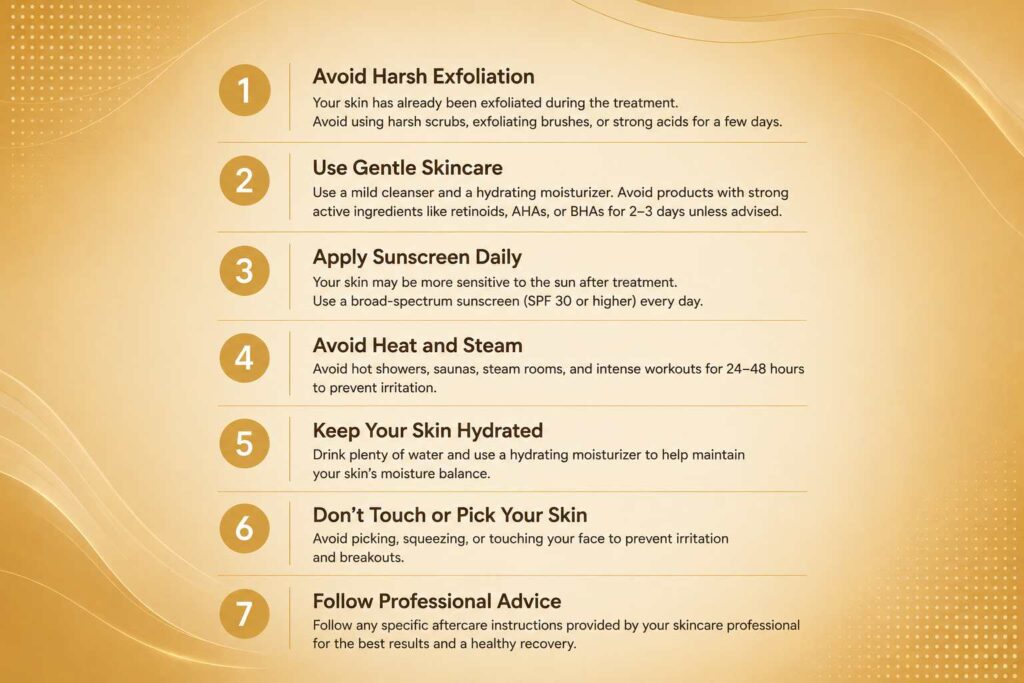
Appropriate aftercare can help minimize irritation and support the results of the treatment.
Avoid Aggressive Exfoliation
The skin has already undergone exfoliation during the treatment. Strong facial scrubs or additional exfoliating products immediately afterward may cause irritation.
Choose Gentle Skincare
Use a gentle cleanser and suitable moisturizer after the procedure.
People using retinoids, exfoliating acids, or other strong active ingredients should follow appropriate instructions regarding when to restart them.
Use Sunscreen
Sun protection is especially important after exfoliating skincare procedures.
Broad-spectrum sunscreen and other appropriate sun-protection measures can help protect the skin from ultraviolet exposure.
Avoid Picking or Squeezing
Avoid squeezing pimples, blackheads, or pores following treatment. Picking can cause unnecessary irritation and may contribute to marks.
Keep the Skin Hydrated
Regular moisturization helps support the skin barrier and maintain hydration.
Follow Individual Aftercare Instructions
Aftercare can vary depending on skin sensitivity, products used during treatment, and whether other procedures were performed.
How Often Can HydraFacial Be Done
There is no single HydraFacial schedule suitable for everyone.
Treatment frequency depends on:
- Skin type
- Skin sensitivity
- Hydration levels
- Degree of congestion
- Treatment goals
- Current skincare routine
- Response to previous treatments
Some people choose occasional treatments, while others include professional facials as part of a regular skincare routine.
More frequent treatment does not necessarily mean better results. Treatment intervals should be selected according to individual skin requirements.
HydraFacial vs Traditional Facial
HydraFacial and traditional facials share some objectives but use different techniques.
A traditional facial may involve cleansing, steam, massage, masks, manual extraction, and moisturization.
HydraFacial uses specialized equipment to combine cleansing, exfoliation, suction-based extraction, and hydration.
Traditional facials can vary considerably according to the techniques and products used. A device-assisted HydraFacial follows a more structured treatment process while still allowing customization.
The right option depends on skin type, sensitivity, concerns, and personal skincare goals.
HydraFacial vs Chemical Peel
HydraFacial and chemical peels are different procedures.
Chemical peels use specific chemical solutions to exfoliate the skin at different depths. Depending on the type and strength of peel, redness, sensitivity, or visible peeling may occur afterward.
HydraFacial generally provides a gentler combination of cleansing, exfoliation, extraction, and hydration.
People primarily concerned with dehydration, mild congestion, dullness, or routine skin maintenance may consider HydraFacial. More significant pigmentation, scars, or texture concerns may require different approaches after professional assessment.
Possible Side Effects and Limitations
Although HydraFacial is generally considered a minimally invasive cosmetic treatment, temporary reactions are possible.
These may include:
- Mild redness
- Temporary sensitivity
- Tightness
- Mild irritation
- Temporary breakouts in some people
People with highly sensitive or reactive skin may need a modified treatment protocol.
It is also important to understand the limitations of the procedure.
HydraFacial is not intended to replace medical treatment for significant acne, skin infections, inflammatory skin disorders, deep acne scars, or other dermatological conditions.
Expectations should therefore remain realistic.
When Should HydraFacial Be Avoided
Treatment may need to be postponed when the skin is injured, irritated, or affected by certain active conditions.
Situations that may require additional assessment include:
- Active skin infections
- Open wounds
- Significant sunburn
- Severe irritation
- Active inflammatory skin flare-ups
- Recently treated skin that has not fully healed
- Known sensitivity to treatment ingredients
Medications, allergies, pregnancy, recent cosmetic procedures, and existing skin conditions should be discussed before treatment.
Tips for Better HydraFacial Results
The benefits of professional facial care can be supported with a consistent home skincare routine.
Maintain a Simple Skincare Routine
A basic skincare routine usually includes cleansing, moisturizing, and sun protection.
Additional skincare products should be selected according to individual concerns and skin type.
Use Sunscreen Regularly
Repeated sun exposure can contribute to uneven pigmentation, premature skin ageing, and changes in skin texture.
Regular broad-spectrum sunscreen is therefore an important part of daytime skincare.
Avoid Over-Exfoliating
Using several exfoliating acids, facial scrubs, retinoids, and professional exfoliation treatments too close together can irritate the skin.
More exfoliation does not necessarily produce healthier skin.
Maintain Skin Hydration
A suitable moisturizer can help support the skin barrier and prevent excessive dryness.
Share Relevant Information Before Treatment
Before undergoing a facial, mention any allergies, current medications, active skincare products, recent cosmetic treatments, and previous skin reactions.
This can help determine whether the treatment should be customized or postponed.
Conclusion
HYDRAFACIAL TREATMENT IN THRISSUR combines cleansing, exfoliation, extraction, and hydration in a single non-invasive skincare procedure. It may be considered for common cosmetic concerns such as dullness, dehydration, mild pore congestion, blackheads, rough texture, and early signs of skin ageing.
Its major advantages include gentle extraction, customizable treatment stages, hydration, and minimal downtime. However, HydraFacial is a cosmetic skincare procedure rather than a treatment for every skin condition.
Results can vary depending on skin type, treatment frequency, skincare habits, and aftercare. Maintaining regular sun protection, gentle cleansing, and appropriate moisturization can help support healthy-looking skin.
For people considering professional facial care in Thrissur, understanding their skin type, choosing an appropriate treatment protocol, and maintaining realistic expectations are important steps toward achieving refreshed and well-hydrated-looking skin. According to the American Academy of Dermatology (AAD), following gentle skincare practices can help maintain healthy skin and reduce irritation.
Frequently Asked Questions
HydraFacial is generally considered comfortable. A gentle suction sensation may be felt while the device moves across the skin. Individual experiences can vary.
The duration depends on the selected treatment protocol, skin condition, and additional steps. A standard treatment can generally be completed without requiring a lengthy appointment.
The extraction stage is designed to remove oil and debris from congested pores. This may help reduce the appearance of blackheads.
HydraFacial may be suitable for oily and congested skin when appropriately customized. Persistent acne or significant inflammation may require separate assessment.
Yes. Hydration is an important part of the procedure. A hydration-focused protocol may be considered for people experiencing dry or dehydrated-looking skin.
HydraFacial may help improve general surface smoothness, but it should not be expected to remove established acne scars. Different types of scars may require targeted treatments.
Recommendations can vary depending on skin sensitivity and the treatment performed. Allowing the skin some time without heavy makeup may be recommended.
Some people notice smoother, cleaner, and more hydrated-looking skin shortly after the procedure. Results and their duration vary between individuals.
No treatment can permanently eliminate pores. Clearing congestion and improving skin hydration may temporarily make pores appear less noticeable.
The ideal frequency depends on skin type, sensitivity, concerns, and treatment goals. An individualized schedule is preferable.